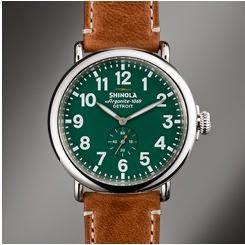
There are two occasions where a man (or woman) should never wear a watch.
One is while making love. (It's just bad form.)
The other is while in the shower. It's just an all-around bad idea.
And if you're wearing a watch while making love in the shower, please exit this blog immediately and tune in to the all pro wrestling TV channel, because this is going to be way over your head.
So let's just focus on the shower. I am continually asked if a certain watch I am selling (a vintage watch, no less, because that's all I sell) is OK to wear in the shower, bathtub, or whirlpool. Here's a recent example, from an eBay buyer who was thinking of bidding on a near mint condition circa 2000 Zodiac Sea Wolf of mine:
Hello:
Regarding your Sea Wolf, I want to be able to wear the watch when I take a shower. I guess I expect that level of waterproof from a dive watch. Is there a reason I should know about that you made the statement that you do not guarantee the watch to be water resistant? Are you just covering your self? Do you think the watch will be OK for everyday use, including showering?
Thanx
James
I replied and also posted this response in the auction:
James: Yep, it's definitely a CYA (cover your a**) thing. Even though the watch is close to new old stock condition, you have to remember that the seals and gaskets in the watch are probably 15 years old or more (I estimated late 1990s or early 2000s for date of production). So I couldn't guarantee that the watch would be good for showering. I think the watch is fine for the occasional splash, getting caught in a rainstorm, perspiration, and so forth. But I can't/won't guarantee it against a constant, sustained shower of water
Sorry,
Bruce
OK, let's for a moment set aside the whole "how lazy/ADD/OCD do you have to be to need your watch in the shower?" types of questions, and just look at the practical reasons why not to:
1. Water resistant watches, even diver watches, are built for cold water, not hot, and not for steam. Hot water and steam soften gaskets, and steam can get into places water can't. Many are the stories I've heard of people with a brand new diver watch seeing fog under the crystal after repeated use in the shower.
2. Soap and shampoo also soften/dissolve seals and gaskets.
3. You can't thoroughly wash the area of your wrist covered by the watch, which tends to be dirty and/or sweaty anyway from being covered with the watch. Kind of like showering while wearing an athletic cup. (Sorry; too graphic?).
Points one and two go double for a vintage watch, even one that was originally "waterproof" or water-resistant from the factory. Over time, the seals and gaskets have become brittle and/or have shrunk, and whatever "water resistance" may have been there to begin with is now severely compromised. It amazes me that anyone would even think of taking a vintage watch near water. It's a little like using a restored 1956 Chevy Bel Air to haul garbage to the dump, I mean, yeh, it's possible, but why would any sane person do it?
Now, onto the weird rationalizations guys (in particular) use to justify showering avec montre-bracelet:
1. I don't want lose it. Good God, man, it's not like your watch is the size of your wedding band, especially today's manhole-cover-sized watches. Put it next to your toiletries on the sink, or on the hook below your towel. The wear and tear on your watch aren't worth it.
2. Someone might steal it. Um, here's a thought: If you're in a public place like a gym, lock it up in your locker. If your watch is that valuable that someone might steal it, why would you subject it to undue wear-and-tear in the shower?
3. It looks cool. Honestly, Bubba, who are you trying to impress? Are you trying to be like 007 or Jason Bourne? Well, stop it. I've seen the movie scenes, and both Daniel Craig and Matt Damon look equally ridiculous wearing their watches in the shower.
So c'mon guys. Take it off. Your watch doesn't belong in the shower. Next to texting while driving, it's probably the dumbest idea ever. Your wife/partner/lover will not think you any less (or more) sexy if you exit the shower with a bare wrist. If you've got a body like the guy above, the wristwatch isn't going to make a damn bit of difference. And if you've got a body like mine (think Jack Black, only more body hair) it's not going to make a difference, either!
Cheers,
Bruce
Wednesday, June 18, 2014
Monday, May 26, 2014
Hitting Paydirt in Oklahoma
I just returned from a successful buying trip in Oklahoma City ... 980 miles each way from my hometown of Evansville, WI.
Which is good because I gotta tell you, and with apologies to the 650,000 people that call this place home, the city itself was kind of a downer. The primary industries there are based on agriculture and energy (oil and natural gas) so the city has a very industrial/agricultural "feel" to it. Nearby Tinker Air Force Base, which employs 6,000 military and civilian personnel, adds elements of high security and miles upon miles of barbed wire fencing. The two main traffic corridors through the city -- Interstate 35 and Interstate 40 -- are a nightmare to navigate, with frontage roads that often require one to exit past a desired destination, turn around, and exit from the other side of the Interstate.
My motel, a Day's Inn facing Interstate 35, was adequate, but I have never in my life seen an Interstate exit so totally bereft of any restaurants within walking distance. There is almost always at least one or more of the "usual suspects" at any Interstate exit located within a major metropolitan district ... a Denny's, Waffle House, an IHOP ... that will do in a pinch if you simply need to put something in your stomach. But the closest eateries of any kind required hopping on the Interstate, and doing a crazy loop-de-loop to get back. The good news is that the place was only $45/night, proving once again the old adage that you get what you pay for. And for what I required of a motel while there -- basically a place to flop -- it was fine.
Add to that 90 degree (or better) heat each day I was there, with a near constant 20 mph wind
blowing out of the south. So it was like walking around in a convection oven,
not that I was out in it much. And it didn't help that my arrival coincided with the
one-year anniversary of the tornado that wiped out Moore, Okla., just down the
road from me, which was plastered all over the local news. And of course the coup de grace: Reminders of the 1995 Federal Building bombing are everywhere, including a national memorial and museum. Now there's a real upbeat attraction for you.
Fortunately, I hit a few good restaurants for dinners while I was there -- an authentic '50s cowboy café in the old stockyard district, a good rib
joint, and an Italian place that served a fair facsimile of NY-style
pizza. But a few good restaurants alone would not provide an incentive for me to hop in the old Prius and return to this city stuck smack dab in the middle of Tornado Alley.
You wouldn't think this a likely location for a watch dealer/collector looking to sell out, but here he was, born and raised here, with parents born, raised, and buried here. A genuine Okie. And since he didn't want to mail the stuff, or travel to see me, I had to come to him. I was rewarded with a nice cache of perhaps 200 or so
watches, plus about the same number of movements, and various parts, watch
bands, etc. All the stuff that I like ... affordable, middle of the road type
stuff. Some will be on my website soon, a lot will end up on eBay, and I'll be
taking a big box of the stuff to the National for my mart table. The seller
seems to be having a little case of seller's remorse, so I am still trying to
smooth things over. It's just going to take a little patience. The guy is
definitely a few bricks shy of a full load, but I've known him for years and he
just takes a little extra massaging. Not that I swindled the guy by any means,
in fact quite the opposite. I was quite generous with him because I know he is
in financial straits.
Thursday, May 1, 2014
NAWCC Library Archives Reveal Mido Treasures
Die-hard collectors of vintage Mido wristwatches are no doubt aware that the company produced a series of novelty watches in the late 1920s with cases modeled after the radiator grills of various cars produced at the time, including Buick, Bugatti, Fiat, Ford, Excelsior, and Hispano-Suiza:
These models are highly prized by not only vintage watch collectors, but car collectors as well. What you may not know (or at least I didn't) was that Mido was famous for producing numerous novelty watches through the years. I uncovered several of these during a visit this past week to the NAWCC Library & Research Center in Columbia, Pa. I try to visit the library every couple of years or so to mine raw date for my articles and, now, my blog. My visit this time around gave me a chance to meet the new Library Director, Sara Dockery, as well to visit with Nancy Dyer, Librarian/Archivist and longtime friend. I also got a chance to meet the the new Watch & Clock Bulletin Editor, Monica Elbert, with whom I was very impressed and am confident will carry on in the best tradition of the magazine, and add her own unique interpretation to it as well.
These latest watches were unearthed by going page-by-page through old issues of the Swiss Horological Journal (SHJ) from the 1920s, '30s, and '40s, which are kept in bound form in the Library's archival section. This blog entry (and more to follow) shows just how valuable this resource is to NAWCC members. The portion of NAWCC members' dues that goes to preserve this resource is money well spent and, sadly, is an under-utilized resource by members. Seriously, if you're an NAWCC member, and your travels take you anywhere near Columbia, Pa., stop in and pay a visit to the Library and Research Center. Visit, don't call! Treasures await the person who is willing to browse in person!
Anyway, the first little treasure I found was the Mido "Radiotime," described in a 1940s volume of SHJ:
It is described in the magazine thusly:
"We wish to draw our readers' attention to a new watch which has come at the right time: the Mido Radiotime, presented by Mssrs. Mido S.A. of Bienne. Every day, millions of people listen the time signal given over the radio or telephone by different observatories. They set their watches as best they can, naturally with more or less precision as no watch, up to now, has allowed the exact registration of the time signal.
"The Mido Radiotime fills this gap: is is the first watch rendering possible the simultaneous registrations of the exact time, (minute and second) by simply pressing a pusher fitted in the crown. This can be done four times per hours, each 15, 30, 45, and 60 minutes. It's functioning is very simple and exact, the three hands are immediately and simultaneously adjusted on the moment desired.
"In this era of the radio, the mew Mido creation will certainly be warmly welcomed."
The watch has pictured in the annual "Complete Price Guide to Watches," but its operation has never been explained, nor have I even encountered one. If you have one of these watches, please contact me with any further information you may have.
Mido also produced a series of encapsulated/hermetic watches, some of which are shown below from a 1936 issue of SHJ:
Three more models of encapsulated pocket watches were created for poker and domino aficionados and shown in a 1937 SHJ issue:
as well as a more more generic model that would be worn as a fob:
Also, many collectors may not know that Mido created a number of more traditional chronographs in addition to the "Multicenter Chronograph" that most people are familiar with, where all the hands of the watch and chronograph are mounted on the center post. Here are three more traditional chronograph models shown in a 1937 issue of SHJ:
Last, but not least, I draw your attention to a little-known encapsulated pocket watch with cutout bezel that Mido made for a while under the model name "Melik Mido." I contacted the company a few years back, and they assured me, having gone so far as to consult with a surviving member of the the founding Schaeren family, that the company never made such a watch. But evidence points to the contrary, as I found not one, but two, mentions of the model in a 1935 issue of SHJ:
I have an example of the lower model in my own collection, which led me to contact the company. You will notice in the upper example that the world "Melik" was hastily blocked out by SHJ editors prior to printing the magazine. However, they missed the "Melik" in the lower example. My guess is that shortly after producing this model, the company decided to pull it. Why, we do not know. And we have no explanation as to the meaning of "Melik." A Google search of the word reveals that it is principally a word of Armenian origin, indicating a noble title. But in any event, this evidence confirms, at least in my mind, that Mido did produce this watch, if only for the briefest period of time!
I hope you have enjoyed this little journey through some of the more unusual models produced by this great watch company, now owned by the giant Swiss watch conglomerate, Swatch Group.
Bruce
Tuesday, April 22, 2014
Shinola CEO hints at possible mechanical watch
A Shinola mechanical watch could soon be a reality, according to Steve Bock, CEO of Shinola, Detroit, makers of quartz watches, bicycles, leather goods, and soon furniture.
In an interview at Baselworld 2014, Bock told me that the pieces to the puzzle are basically in place; it's just a matter of timing (no pun intended), and how a mechanical wristwatch fits into the company's overall vision of being a "design company" and not just a "watch company."
| Steve Bock |
"Where we will obtain the mechanical components, and how we will retrain our assembly staff will be two big issues," says Bock. "But we have no reason to believe that either will be a stumbling block. With our success so far, we have people knocking at our door to help us in any direction that we wish to go."
Shinola's big news at Baselworld 2014 was the announcement of their new limited lifetime warranty, which goes into effect not only for all new Shinola quartz watches sold, but is retroactive for all watches sold previously. In case of defects, all components (excluding battery, leather strap and buckle) are covered by the warranty, and will be repaired (or the watch will be replaced) free of charge. If the exact model is not available for replacement, a watch of equal value and similar style will be provided. A copy of the receipt and/or your completed warranty card is required as proof of purchase. A check or money order payable to Shinola/Detroit, LLC in the amount of $25.00 as service and handling fee must be included for all warranty and repair services. The fee is subject to change.
| A "Runwell" model from the company's collection. |
Shinola says the warranty is unique in the industry, and Bock says it speaks to the confidence not only in the watches themselves, but to the company's confidence of being around for a very long time.
Another issue will be price. Shinola's current entry level price for a quartz timepiece is about $500. While Bock declined to get into specifics, it's a sure bet that a mechanical wristwatch could not be produced at that price level, at least not one of any quality. Currently, the entry price for a man's watch with a Swiss-made automatic mechanical movement is about $1,000.
"It (producing a mechanical watch) is over the horizon, but not that far over the horizon," says Bock. "If you come back and talk to us a year from now, I think we would have a more specific answer for you."
Shinola's next big announcement will be its launch into the furniture business, which will bring back a manufacturing sector long crippled in the USA by migration of that industry to Asia. The move is designed to further enhance Shinola's goal of being known as a "design company," rather than just a watch company, though watch sales currently make up about 85% of Shinola's business, according to Bock.
Look for my complete story on Shinola in the May/June issue of the NAWCC's Watch & Clock Bulletin, out in about a week.
Bye for now,
Bruce
Wednesday, April 2, 2014
"We're All Mad Here ..."
... said the Cheshire Cat to Alice, in the Lewis Carroll classic, when she lamented that she didn't wish to mingle among the crazy. In describing my impressions of the current-day watch market. I have to say I feel a little bit like Alice who fell into the rabbit hole and landed in Wonderland.
I certainly do not wish to bite the hand that, literally, fed me this past week. As an accredited member of the media, I was well cared for by the folks at Baselworld 2014 (BW2014): complimentary admission (worth $165 all by itself); soup, sandwiches and beverages every day for lunch (saving me from a fate of energy bars that I had brought from home to avoid the mafia prices for food by the fair concessioners); and a very nice media center with work stations, Wi-Fi, and restrooms.
But I have to be honest: Prices for new watches are simply ridiculous.
I knew going into BW2014 that prices on new mechanical watches are incredibly higher -- sometimes by a factor of 10 times or more -- than a vintage piece by the same manufacturers. I gladly concede that some of this is due to better materials (both movements and cases), and just plain old inflation. A nice Omega Seamaster in stainless steel that cost $145 in the year 1955 would be roughly equivalent to $1,266 in 2014.
But try to find an Omega Seamaster in the 2014 catalog for anywhere near that price. The most basic stainless steel Seamaster with an automatic movement and a leather strap will run you about $5,400 at full manufacturer's suggested retail price (MSRP).
And the reason for that became abundantly clear at BW2014:
Marketing.
I have no way to prove this, but I feel fairly certain that once upon a time in the not too distant past (let's say the 1950s) that marketing/advertising made up 10 or maybe 15% of a watch's retail price. Today, that percentage is 50% or better for the vast majority of the brands (with a few exceptions), and I challenge anyone to prove me wrong. An industry insider at BW2014 told me, off the record, that it's not unusual for a watch company to take their total cost of the actual material that goes into a watch, and multiply that by a factor of eight or even 10 to arrive at MSRP.
Modern watch marketing is filled with components that company founders and their second- and even third-generation heirs could not possibly have imagined ... celebrity endorsers, high profile (and high cost) sports sponsorships, movie tie-ins, and image advertising in high priced luxury magazines. One watch company, Jacques Lemans (which I have never heard of, by the way), is using Kevin Costner as its celebrity endorser.
Kevin frickin' Costner.
I mean, c'mon Kevin. You're a likable enough guy. Loved you in "Dances With Wolves," and "Tin Cup," among other movies. But for Christ's sake, stick to what you know, will you? Did you really need a quarter million dollars (or whatever they gave you) and a free watch?
So I really don't know where this is all headed, but I'm of the firm belief that the Swiss watch industry, after nearly being extinguished by the quartz revolution of the 1970s and early '80s, is headed for another crisis, but this one of sheer gluttony. There are simply way too many diners at the table grabbing for a slice of a pie that isn't nearly as big as industry promoters are making it out to be.
Many people seem to think that Asia is the new pie in which everyone will stick their forks. I have my doubts. Yes, Asia certainly has the sheer population. But the number of people there who can afford a $100,000 watch, or a $10,000 watch, or even a $1,000 watch, is very small.
The other troubling phenomenon that is taking place is the decision by many watch companies to open their own "boutiques" -- small stores where only their own product is offered. This is just plain bad news for the consumer, and more bad news for the independent jewelry store industry. So not only will customers pay exorbitant prices for watches, they won't even have a chance to compare features and value among multiple brands.
So to sum up, I feel tremendously fortunate to have had this chance to visit Wonderland. Every watch aficionado should try to make this pilgrimage once in his or her lifetime. But having seen what is happening in the world of modern watches, I'm even more content to play in my little garden of vintage wrist watches, and steer clear of the rabbit hole.
Bruce
I certainly do not wish to bite the hand that, literally, fed me this past week. As an accredited member of the media, I was well cared for by the folks at Baselworld 2014 (BW2014): complimentary admission (worth $165 all by itself); soup, sandwiches and beverages every day for lunch (saving me from a fate of energy bars that I had brought from home to avoid the mafia prices for food by the fair concessioners); and a very nice media center with work stations, Wi-Fi, and restrooms.
But I have to be honest: Prices for new watches are simply ridiculous.
I knew going into BW2014 that prices on new mechanical watches are incredibly higher -- sometimes by a factor of 10 times or more -- than a vintage piece by the same manufacturers. I gladly concede that some of this is due to better materials (both movements and cases), and just plain old inflation. A nice Omega Seamaster in stainless steel that cost $145 in the year 1955 would be roughly equivalent to $1,266 in 2014.
But try to find an Omega Seamaster in the 2014 catalog for anywhere near that price. The most basic stainless steel Seamaster with an automatic movement and a leather strap will run you about $5,400 at full manufacturer's suggested retail price (MSRP).
And the reason for that became abundantly clear at BW2014:
Marketing.
I have no way to prove this, but I feel fairly certain that once upon a time in the not too distant past (let's say the 1950s) that marketing/advertising made up 10 or maybe 15% of a watch's retail price. Today, that percentage is 50% or better for the vast majority of the brands (with a few exceptions), and I challenge anyone to prove me wrong. An industry insider at BW2014 told me, off the record, that it's not unusual for a watch company to take their total cost of the actual material that goes into a watch, and multiply that by a factor of eight or even 10 to arrive at MSRP.
Modern watch marketing is filled with components that company founders and their second- and even third-generation heirs could not possibly have imagined ... celebrity endorsers, high profile (and high cost) sports sponsorships, movie tie-ins, and image advertising in high priced luxury magazines. One watch company, Jacques Lemans (which I have never heard of, by the way), is using Kevin Costner as its celebrity endorser.
Kevin frickin' Costner.
I mean, c'mon Kevin. You're a likable enough guy. Loved you in "Dances With Wolves," and "Tin Cup," among other movies. But for Christ's sake, stick to what you know, will you? Did you really need a quarter million dollars (or whatever they gave you) and a free watch?
So I really don't know where this is all headed, but I'm of the firm belief that the Swiss watch industry, after nearly being extinguished by the quartz revolution of the 1970s and early '80s, is headed for another crisis, but this one of sheer gluttony. There are simply way too many diners at the table grabbing for a slice of a pie that isn't nearly as big as industry promoters are making it out to be.
Many people seem to think that Asia is the new pie in which everyone will stick their forks. I have my doubts. Yes, Asia certainly has the sheer population. But the number of people there who can afford a $100,000 watch, or a $10,000 watch, or even a $1,000 watch, is very small.
The other troubling phenomenon that is taking place is the decision by many watch companies to open their own "boutiques" -- small stores where only their own product is offered. This is just plain bad news for the consumer, and more bad news for the independent jewelry store industry. So not only will customers pay exorbitant prices for watches, they won't even have a chance to compare features and value among multiple brands.
So to sum up, I feel tremendously fortunate to have had this chance to visit Wonderland. Every watch aficionado should try to make this pilgrimage once in his or her lifetime. But having seen what is happening in the world of modern watches, I'm even more content to play in my little garden of vintage wrist watches, and steer clear of the rabbit hole.
Bruce
Monday, March 31, 2014
Brand Impressions from Baselworld
Here are my impressions of some of the brands. My choices were subjective, and based on what interested me. I made no attempt to make a marathon of the show and include every maker, as I am simply not built for it, physically or mentally. I tried to focus on second- and even third tier brands. I deliberately avoided "jewelry" watch brands, high end brands, and brands connected with the conglomerates, such as Swatch Group, LVMH, and Richemont Group, as they get plenty of press, and gotten too crazy anyway.
OK, in no particular order:
1. Eberhard. Excellent. They let the product speak for itself. Zero celebrity ambassadors. They had a wonderful display of vintage watches. They granted me a private interview, and their general manager, Mario Peserico, had some interesting insights into the concept of "luxury," which I will share later. Their PR contact promises to work very hard in the next 30 days to get me some nice archival material for an article.
2. Glycine. Very good. Celebrating their 100th anniversary this year. They also had a nice display of vintage watches. No time for an interview, but they did refer me to their web-based heritage project on Facebook, which they are doing in conjunction with a private collector.
3. Doxa. Poor. Very sad what has happened to this former great watch brand. Despite a very nice display of vintage watches, their booth was staffed by fembots who referred me to the company website for historical information.
4. Edox. Trying hard. Edox has a small but loyal following among sport and dive watch enthusiasts, and I had hoped they could assist me with some historical information. They granted me a private interview, but could shed little light on their history, as most records were discarded in the 1980s.
5. Enicar. They were very nice to me and presented me with a nice hardcover book, but they are basically catering to the Asian market with big gaudy watches. Their vintage "Sherpa" series watches were so nice and are so very collectible.
6. Alpina. A real pity. I had high hopes with this brand going to the show, i.e. that they could provide me with some artifacts for a historical story. But it has been bought by the husband-and-wife company who own Frederique Constante and is being used as the "sport brand" compliment to the FC luxury line. I got the impression they would just as soon forget that Alpina ever made a dress watch. Although they DO mention, by no small coincidence I'm sure, their role in the production of the caliber 877 movement for the Rolex Prince.
7. Shinola. OK, I know. Quartz watches. But I love the back story of this company, and I got a 15 minute private interview with Steve Bock, the CEO. Although I could not pin him down definitively, he hinted that mechanical watches are on the horizon. Their big news at BW2014 was the limited lifetime warranty on all Shinola watches, retroactive to all watches sold previously.
8. Blancpain. Super nice dive and sport watches. They gave me a really nice hardcover book, but no vintage watches on display. Their vintage "50 Fathoms" and "Bathyscaphe" just keep going up, up, up. Hope to do a story on them some day.
9. Eterna. Fantastic brand in their day. Not quite sure what is happening with them. They were sold to the China Haiden Group. China will eventually own everything I suppose.
10. West End. They made some very neat watches in the early days for the British colonies. Now, a total money grab. They claims to be "Swiss," but they are catering to the Asian market. What a pity. The female Asian staffing the booth seemed like she could hardly stand my presence, shoved a catalog in my hand, and told me she had appointments to keep.
11. Mathey-Tissot. Made very nice vintage watches, now with a strong Asian connection. They treated me courteously and showed me several vintage pieces from their private area, and also had several nice vintage pieces on display. They are a different company from Tissot, but they were connected once upon a time, and I'm still not quite sure how all that worked. Will find out.
Next up will be my comments on the current state of the watch industry, comments are not likely to win me any praise from many of the manufacturers, nor from the Baselworld media accreditation committee, but then neither is very likely to give a shit about my tiny blog or the NAWCC Watch & Clock Bulletin, for that matter. But at least it is my honest opinion and my own original thoughts. I witnessed many so-called journalists here copying their stories verbatim from company and show press releases, and putting their bylines on them. In effect, much of the watch media is merely a "tool" of the industry, which is a sad thing when there is virtually no distinction in watch publications these days between advertising and editorial, but I'm sure that's just the way the industry likes it. Stay tuned for the commentary from this very small (but at least honest) fish in the big pond.
Bruce
OK, in no particular order:
1. Eberhard. Excellent. They let the product speak for itself. Zero celebrity ambassadors. They had a wonderful display of vintage watches. They granted me a private interview, and their general manager, Mario Peserico, had some interesting insights into the concept of "luxury," which I will share later. Their PR contact promises to work very hard in the next 30 days to get me some nice archival material for an article.
2. Glycine. Very good. Celebrating their 100th anniversary this year. They also had a nice display of vintage watches. No time for an interview, but they did refer me to their web-based heritage project on Facebook, which they are doing in conjunction with a private collector.
3. Doxa. Poor. Very sad what has happened to this former great watch brand. Despite a very nice display of vintage watches, their booth was staffed by fembots who referred me to the company website for historical information.
4. Edox. Trying hard. Edox has a small but loyal following among sport and dive watch enthusiasts, and I had hoped they could assist me with some historical information. They granted me a private interview, but could shed little light on their history, as most records were discarded in the 1980s.
5. Enicar. They were very nice to me and presented me with a nice hardcover book, but they are basically catering to the Asian market with big gaudy watches. Their vintage "Sherpa" series watches were so nice and are so very collectible.
6. Alpina. A real pity. I had high hopes with this brand going to the show, i.e. that they could provide me with some artifacts for a historical story. But it has been bought by the husband-and-wife company who own Frederique Constante and is being used as the "sport brand" compliment to the FC luxury line. I got the impression they would just as soon forget that Alpina ever made a dress watch. Although they DO mention, by no small coincidence I'm sure, their role in the production of the caliber 877 movement for the Rolex Prince.
7. Shinola. OK, I know. Quartz watches. But I love the back story of this company, and I got a 15 minute private interview with Steve Bock, the CEO. Although I could not pin him down definitively, he hinted that mechanical watches are on the horizon. Their big news at BW2014 was the limited lifetime warranty on all Shinola watches, retroactive to all watches sold previously.
8. Blancpain. Super nice dive and sport watches. They gave me a really nice hardcover book, but no vintage watches on display. Their vintage "50 Fathoms" and "Bathyscaphe" just keep going up, up, up. Hope to do a story on them some day.
9. Eterna. Fantastic brand in their day. Not quite sure what is happening with them. They were sold to the China Haiden Group. China will eventually own everything I suppose.
10. West End. They made some very neat watches in the early days for the British colonies. Now, a total money grab. They claims to be "Swiss," but they are catering to the Asian market. What a pity. The female Asian staffing the booth seemed like she could hardly stand my presence, shoved a catalog in my hand, and told me she had appointments to keep.
11. Mathey-Tissot. Made very nice vintage watches, now with a strong Asian connection. They treated me courteously and showed me several vintage pieces from their private area, and also had several nice vintage pieces on display. They are a different company from Tissot, but they were connected once upon a time, and I'm still not quite sure how all that worked. Will find out.
Next up will be my comments on the current state of the watch industry, comments are not likely to win me any praise from many of the manufacturers, nor from the Baselworld media accreditation committee, but then neither is very likely to give a shit about my tiny blog or the NAWCC Watch & Clock Bulletin, for that matter. But at least it is my honest opinion and my own original thoughts. I witnessed many so-called journalists here copying their stories verbatim from company and show press releases, and putting their bylines on them. In effect, much of the watch media is merely a "tool" of the industry, which is a sad thing when there is virtually no distinction in watch publications these days between advertising and editorial, but I'm sure that's just the way the industry likes it. Stay tuned for the commentary from this very small (but at least honest) fish in the big pond.
Bruce
Saturday, March 29, 2014
Impressions of a Baselworld Newbie
Basel Switzerland Saturday March 29
The world "show" fails to capture the grandeur, spectacle, and sheer decadence that is Baselworld 2014. But for convenience sake, I will simply refer to this short hand version for my report.
This is my fourth full day at the "show," and I finally feel acclimated enough to give some impressions. First of all there is the sheer scale of this show in terms of physical size. Building 1 (the main exhibit hall) has three stories, with each story requiring ascent by two escalator flights. Each floor is like walking a shopping district in any major city, except each store is a watch or jewelry (or combination) establishment.
Except they aren't really "stores," but rather exhibit pavilions, but unlike any other I've seen. For all practical purposes, they resemble and serve as facilities to house their goods, and keep their staff and visitors comfortable and feeling like they are a brick-and-mortar facility, but they are built in modular fashion in such a way that they can be set up and disassembled in a few days. They are not only functional, but are works of art in themselves designed to dazzle the public and outdo the competition, and attract attention ("Come see what's going on over here."). But at the same time, not be gaudy or garish. Where that line is crossed I am not exactly sure, but as a final test, a pavilion's design must pass final approval by an exhibition committee for being "tasteful" and built to proper scale (they must be two stories tall, for example) and safety code. Take the Hermes pavilion, for example:
A building wrapped in an exoskeleton of wooden slats. An attention grabber for sure, but beyond that I defer to your judgment. One my favorites was the Bulgari pavilion. Not a fan of the brand myself, but was impressed with the Disney Music Hall-inspired design:
Or maybe the sides are a representation of a watchband, who's to say. But these buildings are designed and built in great secrecy, and at a cost that I'm sure is into the millions of dollars. The exhibitor entry fee into the Main Exhibit Hall, street level, I'm told is $5 million, and then the exhibitor must build his pavilion in addition to that. The exterior walls of some pavilions are giant video screens, requiring an entire room inside the pavilion for computers and servers to keep the giant media presentation operational. Other pavilions, meanwhile, have restaurants with professional chefs to feed their staff and VIP guests.
I can't help but be in a certain awe of all this high tech, style, and ingenuity. Yet the average show-goer seems fairly blasé about the whole thing, striding down the walkways of the exhibit hall as though it were an everyday occurrence.
Then there is the whole central plaza, or "Messeplatz," which cuts through the main exhibit hall at street level and serves as the tram stop to deliver showgoers to and from the train stations and various other destinations throughout Basel. Beginning in 2013, it was covered, with a giant "doughnut hole" built into the middle, which serves as a skylight.
Unveiled at the show in 2013, it cost $365 million (comprising the largest chunk of a $500 million makeover of Hall 1). It was prebuilt in modules, and installed in less than 12 months after the closing of the 2012 show. The space above the new ceiling of the Messeplatz, on floors two and three, are now additional exhibition space.
Here are some more numbers and initial impressions of the show:
* An estimated 100,000 people will attend the show;
* There are approximately 4,000 journalists here from all over the world, from well known publications to obscure "I just made it up last week" blogs and Facebook pages. I would go so far as to say that print publications devoted to watches are on their way out. Virtual magazines are where the action is;
* 22 billion Swiss francs of watches were exported from Switzerland in 2013, making watches the backbone of the Swiss economy, even ahead of tourism and chocolate (but not banking, which the industry does not reveal, though I suspect is in excess of 22 billion!);
* Rooms at the Ramada Hotel, immediately adjacent to the fairgrounds, start at 640 Swiss francs (about $755 US) per night, and go up from there, and they are sold out. By comparison, my room at the InterCity Hotel in Freiburg, Germany is $148 per night, plus $58 daily round trip for the train ride to and from Basel.
* The mayor of Basel, attending opening ceremonies, declared Baselworld the city's most important (read $$$-producing) event; and
* the new buzzword this year is "Swissness," both a noun and adjective to designate a singular origin of a watch to Switzerland. The Swiss watch industry successfully petitioned the Swiss parliament to trademark the word, which will give the industry group the right to sue any non-Swiss company that might try to use the word.
Finally, here is a photo of yours truly, a rare moment in a business suit, and holding my all-important media badge which gives access to the "media center," an oasis that affords me wi-fi access (where I am composing this entry now), bathrooms, snacks, and a multitude of caffeine-infused beverages.
That's it for this installment. More to come, including brand impressions.
Bruce
The world "show" fails to capture the grandeur, spectacle, and sheer decadence that is Baselworld 2014. But for convenience sake, I will simply refer to this short hand version for my report.
This is my fourth full day at the "show," and I finally feel acclimated enough to give some impressions. First of all there is the sheer scale of this show in terms of physical size. Building 1 (the main exhibit hall) has three stories, with each story requiring ascent by two escalator flights. Each floor is like walking a shopping district in any major city, except each store is a watch or jewelry (or combination) establishment.
Except they aren't really "stores," but rather exhibit pavilions, but unlike any other I've seen. For all practical purposes, they resemble and serve as facilities to house their goods, and keep their staff and visitors comfortable and feeling like they are a brick-and-mortar facility, but they are built in modular fashion in such a way that they can be set up and disassembled in a few days. They are not only functional, but are works of art in themselves designed to dazzle the public and outdo the competition, and attract attention ("Come see what's going on over here."). But at the same time, not be gaudy or garish. Where that line is crossed I am not exactly sure, but as a final test, a pavilion's design must pass final approval by an exhibition committee for being "tasteful" and built to proper scale (they must be two stories tall, for example) and safety code. Take the Hermes pavilion, for example:
![]() |
| Hermes pavilion (Courtesy Baselworld) |
A building wrapped in an exoskeleton of wooden slats. An attention grabber for sure, but beyond that I defer to your judgment. One my favorites was the Bulgari pavilion. Not a fan of the brand myself, but was impressed with the Disney Music Hall-inspired design:
Bulgari pavilion (Photo courtesy Baselworld)
Or maybe the sides are a representation of a watchband, who's to say. But these buildings are designed and built in great secrecy, and at a cost that I'm sure is into the millions of dollars. The exhibitor entry fee into the Main Exhibit Hall, street level, I'm told is $5 million, and then the exhibitor must build his pavilion in addition to that. The exterior walls of some pavilions are giant video screens, requiring an entire room inside the pavilion for computers and servers to keep the giant media presentation operational. Other pavilions, meanwhile, have restaurants with professional chefs to feed their staff and VIP guests.
I can't help but be in a certain awe of all this high tech, style, and ingenuity. Yet the average show-goer seems fairly blasé about the whole thing, striding down the walkways of the exhibit hall as though it were an everyday occurrence.
Then there is the whole central plaza, or "Messeplatz," which cuts through the main exhibit hall at street level and serves as the tram stop to deliver showgoers to and from the train stations and various other destinations throughout Basel. Beginning in 2013, it was covered, with a giant "doughnut hole" built into the middle, which serves as a skylight.
Messeplatz (Courtesy Baselworld)
Unveiled at the show in 2013, it cost $365 million (comprising the largest chunk of a $500 million makeover of Hall 1). It was prebuilt in modules, and installed in less than 12 months after the closing of the 2012 show. The space above the new ceiling of the Messeplatz, on floors two and three, are now additional exhibition space.
Here are some more numbers and initial impressions of the show:
* An estimated 100,000 people will attend the show;
* There are approximately 4,000 journalists here from all over the world, from well known publications to obscure "I just made it up last week" blogs and Facebook pages. I would go so far as to say that print publications devoted to watches are on their way out. Virtual magazines are where the action is;
* 22 billion Swiss francs of watches were exported from Switzerland in 2013, making watches the backbone of the Swiss economy, even ahead of tourism and chocolate (but not banking, which the industry does not reveal, though I suspect is in excess of 22 billion!);
* Rooms at the Ramada Hotel, immediately adjacent to the fairgrounds, start at 640 Swiss francs (about $755 US) per night, and go up from there, and they are sold out. By comparison, my room at the InterCity Hotel in Freiburg, Germany is $148 per night, plus $58 daily round trip for the train ride to and from Basel.
* The mayor of Basel, attending opening ceremonies, declared Baselworld the city's most important (read $$$-producing) event; and
* the new buzzword this year is "Swissness," both a noun and adjective to designate a singular origin of a watch to Switzerland. The Swiss watch industry successfully petitioned the Swiss parliament to trademark the word, which will give the industry group the right to sue any non-Swiss company that might try to use the word.
Finally, here is a photo of yours truly, a rare moment in a business suit, and holding my all-important media badge which gives access to the "media center," an oasis that affords me wi-fi access (where I am composing this entry now), bathrooms, snacks, and a multitude of caffeine-infused beverages.
That's it for this installment. More to come, including brand impressions.
Bruce
Subscribe to:
Posts (Atom)